
Issue 16: September 6, 2021
In this issue...
We're covering the emerging refugee crisis in Afghanistan, the Refugee Olympic Team's recent participation at the Tokyo Olympics, and recent a migrant-endangering conflict between Lithuania and Belarus. We're also covering a Vermont town's hopes to resettle swaths of refugees and the recent spike in asylum seekers from China.
Monthly U.S. Policy Update
By Diya Britto
On April 14 2021, President Biden decided to continue the plan set into place by the previous administration to remove all United States military forces from Afghanistan. This effort ended in late August when the final troops were airlifted out of the country. During the Withdrawal, on August 15, 2021, The Taliban took over the presidential palace, facing little resistance. Many Afghans are now in danger, and hundreds of thousands to millions of Afghans will likely be displaced in the near future.
On August 16, Biden defended his decision and claimed that even though the process was “messy” the military would help evacuate Afghans who worked with the US. and expand refugee-status access for Afghans in need of help. However, only approximately one third of the afghans who supported the United States during their war against the Taliban were evacuated by the time all U.S. forces had left.
According to Sunil Varghese, policy director for the International Refugee Assistance Project, “Right now, we’re just trying to get people out in any way they can...We need a strong and effective refugee program to make sure that they have a pathway to the U.S.”
Learn more about the displacement crisis caused by these recent developments in United States and NATO policy below.
Tens of Thousands Displaced Due to Taliban Takeover of Afghan Government
By Luisfe Medina
The Taliban’s sudden takeover of Afghanistan has sparked an immense amount of uncertainty for the people of the country, as the terrorist organization's misogynistic and anti-western views leave much of the population frightened for their futures within the Islamic Emirate of Afghanistan (IEA). This event may lead to a new, massive refugee crisis.
According to NATO military officials, as NATO military forces withdrew from Afghanistan, roughly 123,000 civilians were evacuated, but it is unclear at this time how many of those individuals are Afghan nationals. Furthermore, there are millions of Afghan civilians still in the country, many of whom may want to escape.

The United States, United Kingdom, Canada, Germany, Pakistan, and India are receiving the recently evacuated Afghan refugees. Officials expect the European Union to receive over 25,000 refugees, and 15,000 refugees have arrived in Ramstein, Germany to be processed and settled. Officials expect resettlement policies in all of these countries to be relatively lenient. United States officials expect 34,500 special immigrant visas (SIVs) to be issued to ensure the resettlement of Afghan civilians who aided or worked for the US military force, individuals who worked for American media companies within Afghanistan, and individuals who worked for US government funded programs in Afghanistan.
All refugees who receive SIVs will also receive green cards, making them permanent residents of the United States.
Some private businesses are also attempting to ensure the smooth resettlement of Afghan refugees. Airbnb’s Opening Homes program offers temporary accommodations for 20,000 Afghan refugees; Texas Medical Technology is hiring 100 Afghan refugees for manufacturing jobs; telehealth program Hims & Hers is offering 10,000 free mental health calls to Afghan refugees; Verizon is allowing free calls to Afghanistan until September 6; Byte is donating 25,000 oral health kits to Afghan refugees; and many different airlines are providing flights for transporting evacuated Afghans to their destinations of asylum.

Due to conflict between the Taliban and the Afghan government (supported by NATO) and internal conflicts within the Afghan government, Afghanistan has struggled with an immense amount of instability for years. Prior to the takeover, Afghanistan was already responsible for displacing the second largest number of UNHCR registered refugees in the world. The Taliban’s takeover of the government will likely cause this number to increase dramatically in the coming years.
If you would like to help Afghan refugees, please consider donating to or volunteering for the International Rescue Committee and the United States Refugee Admissions Program. For a list of helpful rescue and resettlement agencies, refer to www.wrapsnet.org/resources/.
Refugee Olympic Team Makes Second Olympic Games Appearance in Tokyo
By Jade Xiao
On July 23, 2021, a group of 29 athletes from 11 countries marched across the Tokyo Olympic Stadium under the five-ringed olympic flag as the Refugee Olympic Team. The Tokyo Games were the second Summer olympic games featuring a Refugee Olympic Team.
The Refugee Olympic Team, or the Équipe Olympique de Réfugiés (EOR), was established by the United Nations General Assembly in October of 2015 and debuted at the 2016 Summer Olympics at Rio de Janeiro, Brazil to celebrate and empower the tens of millions of displaced persons around the world.
At the announcement of the team’s creation, Thomas Bach, the President of the International Olympic Committee (IOC), stated, “This will be a symbol of hope for all the refugees in our world, and will make the world better aware of the magnitude of this crisis. It is also a signal to the international community that refugees are our fellow human beings and are an enrichment to society.”

Due to the diverse backgrounds of the team members, the IOC decided that the team would represent the Olympic flag and anthem. The IOC also decided that the Refugee Olympic Team would live in the Olympic Village at each game with all the other athletes. A team entourage of a Chef de Mission, coaches, and technical officials provides for all of the athletes’ needs. The IOC also provides the athletes with team uniforms, insurance, and it covers expenses for participation such as travel and training.
The team is funded by the Olympic Solidarity, the IOC’s global development initiative that supports National Olympic Committees (NOC) around the world and provides the Olympic Scholarship for Refugee Athletes program. For the Tokyo Olympics, the initiative funded 2 million dollars for the Refugee Olympic Team. Refugees who show potential for Olympic qualifications are selected by the NOCs of host countries and receive the Olympic Scholarship to continue their training.
On August 5, 2016, the first Refugee Olympic Team, composed of 10 athletes from Ethiopia, South Sudan, Syria, and the Democratic Republic of the Congo, began competing in the 2016 Games in swimming, judo, and athletics. Due to the vastly positive impact of the EOR at the Rio Olympics, in October 2018, the IOC session announced the continuation of the EOR team at Tokyo 2020.
Multiple NGOs and Olympic organizations, such as the UNHCR, the NOC, the International Sports Federations, and the Tokyo Organizing Committee, took part in the selection process for the Tokyo Olympics. 56 potential athletes were chosen and given the scholarship, and of those athletes, 29 qualified for the team for their exceptional performance. They represented 11 home countries, including Afghanistan, Cameroon, the Democratic Republic of Congo, Eritrea, Iran, South Sudan, Syria, and Venezuela, and 13 host countries. They competed in athletics, badminton, boxing, canoeing, cycling, judo, karate, taekwondo, sport of shooting, swimming, weightlifting, and wrestling, for a total of 12 sports.

As the Olympics concluded, though the athletes of the Refugee Olympic Team did not win medals, their strength and resilience empowered and inspired the millions of refugees and displaced people who live around the world. Refugees’ stories and struggles became known to an immense international audience as the team embodied the true Olympic values of Friendship, Respect and Excellence. As Pierre de Coubertin, the founder of the International Olympic Committee, had said, “The most important thing in the Olympic Games is not to win but to take part, just as the most important thing in life is not the triumph but the struggle.”
The Olympic Solidarity will continue supporting refugee athletes, and the IOC has pledged the EOR will return in 2024 for the Paris Olympics.
Lithuania - Belarus Dispute Endangers Lives of Migrants, Refugees
By Marin Theis
In recent months, the Lithuanian government has accused the Belarusian government of forcibly flying migrants into Lithuania and sending others across the Lithuanian border as a political retaliatory tactic against recent EU-imposed sanctions. The majority of migrants are from Iraq, followed by the Republic of the Congo and Cameroon. They enter Belarus via Russia, where they then cross into Lithuania.
Since May 26th, illegal immigration into Lithuania from Belarus has sharply increased. In response, Lithuania has announced an effort to create a $178M border wall, according to the BBC, in order to prevent illegal immigration. The Lithuanian government has also declared a state of emergency, allowing for more aggressive tactics at the border. Whether the Belarus government is intentionally sending migrants into Lithuania, Lithuania’s aggressive border tactics put migrant lives at risk.
There have been multiple incidents along the border since May, with the most recent involving armed Belarusian security guards pushing migrants across the border into Lithuania. Both countries have released video footage appearing to contradict the other’s account of the incident.
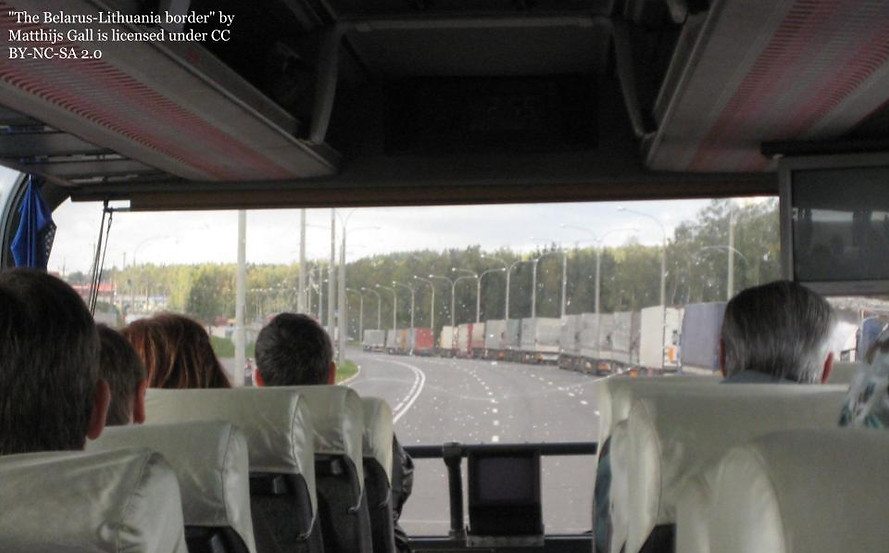
Migrants in Lithuania suffer from a lack of information due to the dearth of translators who can give them accurate information concerning their situations. They are also kept at various locations across the country with differing humanitarian conditions at each site. Lithuania claims it will consider each case individually and grant some asylum, but so far none of the 200+ cases considered have been granted asylum.
The EU imposed sanctions on Belarus as a result of Lukashenko’s actions during the most recent presidential election, where armed security forces disrupted protests violently. Reports of extreme injuries and torture also came out during the protests. Lukashenko has held power for 27 years, and had been accused of rigging the most recent election, which he officially won by a landslide.
Lithuania has given help to the Belarusian opposition, which has enraged Lukashenko. On May 26th, Lukashenko threatened to pour illegal migrants and illegal drugs into the neighboring countries that aided the opposition, including Lithuania. He has not, however, verified if he has actually acted upon this threat. Whether the Lithuanian governments’ allegations are correct, Lithuania’s aggressive border control tactics that the conflict has caused means that this dispute endangers the lives of innocent migrants.
Economic Needs Motivate Gov., NGO Efforts To Resettle Refugees in Vermont
By Julie Chen
In recent months, due to COVID-19 and a declining population, labor shortages have damaged the Brattleboro, VT economy. In order to both assist refugees and to bolster the Brattleboro workforce, The Brattleboro Development Credit Corporation (BDCC) and the Ethiopian Community Development Council (ECDC) have been collaborating on resettlement initiatives. The BDCC is a private nonprofit organization dedicated to bolstering industrial and commercial growth throughout Southeastern Vermont, and improving the quality of life of the region’s residents. The ECDC is a community-based nonprofit organization focused on helping new refugees resettle in the United States by offering both educational and social service programs.
Vermont’s state government views the efforts as very favorable to the state. On March 15, 2021, Vermont Governor Phil Scott wrote to the Bureau of Population, Refugees, and Migration in the U.S. Department of State and advocated for a “strong and viable” refugee program in Vermont. He further expressed his enthusiasm for the shift in the annual refugee admission ceiling after President Biden increased the historic low ceiling of 15,000 refugees to 125,000. At his press conference on August 17, Scott told the public that his office reached out to the White House Intergovernmental Affairs Office to “make sure they knew [Vermont was] here and ready, willing, and able” to receive refugees from “moratorium countries.”

The ECDC initiative, which still requires approval from The United States Department of State, aims to resettle as many refugees as possible as soon as possible, and to quickly thereafter find solutions to barriers such as employment and transportation. In an interview with The Common, a nonprofit magazine based in Amherst, Massachusetts, Tsehaye Teferra, the president of the ECDC, said, “we are going to start small and then grow annually.” While The Council cannot yet confirm from where the refugees would come, Teferra continued that they would all be “fleeing their country because of persecution, either for religion, national origin, or political involvement.”
Brattleboro is facing a housing shortage as a result of an influx of newcomers who moved to the town during the COVID-19 pandemic. This shortage will make finding cost-effective housing for new refugees even harder. However, the BDCC pointed out in a report that the demand for workers is high due to the COVID-19 pandemic, so despite the housing challenges, finding employment for refugees may be rather unchallenging.
Teferra stated, “We do, as a community, need to raise significant funds to support this initiative — not just this year, but every year thereafter,” because the resettlement costs of each refugee can be extensive. Some expenses of resettlement include apartment set-up (for temporary stay), employment assistance, transportation assistance, housing outreach, and help with English and cultural adjustments.

The “Welcoming Communities” program, designed by the BDCC, will support immigrants and refugees once they have resettled by addressing several barriers to their success, including housing, legal services, employment, and transportation. The program involves extensive partnerships with community leaders and employers. Alexander Beck, the manager of Welcoming Communities, told VTDigger, a local Vermont news organization, “The pace at which this occurs is the pace at which we can solve these problems collaboratively.” For example, administrators of the program will work with real estate partners to ensure that, as Beck described, “No one will show up until the housing is secured.”
According to BDCC Executive Director Adam Grinold during an interview with The Commons, the public received the announcement about the refugee resettlement project “enthusiastically.” Tim Maciel, a resident of Brattleboro and a Windham Southeast School District Board member, also mentioned in the interview that “a lot of [residents] feel that having refugees in Brattleboro is not only good economically and the right and compassionate thing” to do, but also that the increased diversity in schools will “tremendously” benefit students.
“We need to make the change that’s going to make Vermont the place we want it to be,” said Ian Goodnow, a select board member of Brattleboro, Vermont, in an interview with VTDigger. “That’s diversity. That’s inclusion.”
Authoritarian Policies Spike Yearly Number of Chinese Asylum-Seekers by 700%
By Peter Favero
Since Xi Jinping was appointed as China’s head of state in 2012, Chinese government authoritarian practices and policies of oppression, including those against Uyghur Muslims, have led to an over 700% increase in asylum-seekers from China by the end of 2020, primarily fleeing persecution for religious beliefs, pro-democracy advocacy, or anti-government dissent, according to The Economist. Hundreds of thousands have fled the country in the past 9 years, with numbers still expected to rise in years to come.
According to a report from UNHCR, as many as 107,854 fled China in search of asylum elsewhere in 2020, compared to just 15,362 in 2012. The motives of China’s massive outpouring of asylum-seekers can broadly be classified into two categories: religious and political. China’s genocide against Uyghur Muslims and Turkic peoples in the Xinjiang province serves as the primary force pushing religious minorities out of the country. At least 1 million Uyghurs have been detained in brutal concentration camps since 2017, tortured, forced to eat pork, and often forcibly sterilized. Travel for Uyghurs is heavily restricted, but some have been able to flee overseas nonetheless.
As the genocide still continues today, it is only one part of Xi Jinping’s broader goals to push more of the country’s religious minorities towards the principles of the officially atheist Chinese Communist Part. These goals have prompted significant numbers of such targeted minorities to flee. Buddhists and Christians make up the vast majority of these religious dissidents.

According to The Council on Foreign Relations (CFR), Chinese authorities have commonly detained and tortured Buddhist monks for refusing to denounce the Dalai Lama. The CFR cited that the Chinese government utilized mass campaigns to remove crosses from church roofs or demolish such churches altogether and detained some 5000 people, including 1000 priests, seemingly for arbitrary reasons. The CFR cites religions’ organizational power as the primary motivation for government crackdowns, due to Chinese Communist Party fears of major religious institutions challenging their authority in inland provinces.
While Article 36 of the Chinese constitution explicitly states that Chinese citizens “enjoy freedom of religious belief,” Xi and the Chinese Communist Party’s oppressive actions have made religious Asylum a desperate goal for many members of religious minorities in China.
In addition to religious oppression, the Chinese government’s political oppression, motivated by fears of instability and dissent, have pushed more and more Chinese people to seek asylum elsewhere. Since Xi’s inauguration, there have been several major protests against the Chinese government, the largest of which have included millions of citizens at a time.

In order to combat such massive public discontent, the Chinese government has turned towards authoritarian suppression, including systematic campaigns of harassment, intimidation, and lengthy imprisonment of dissenters, according to Amnesty International. Specific incidents include the ‘709 Crackdown’ of July 9th 2015, when the Chinese Communist Party detained some 200 human rights lawyers for various “subversions of state power,” later arresting or disbarring most of them. Three such lawyers – Yu Wensheng, Jiang Tianyong, and Wang Quanzhang – spoke out against torture they received in jail.
The constant fear of crackdowns like these motivates activists to flee. Frequently, they apply for asylum after exiting the country on tourist or business visas without assurance of what to do if asylum is denied. Moreover, many Western recipients of refugees and asylum-seekers have a massive backlog of applicants, limiting the chances of Chinese asylum seekers to be granted that asylum.
Finally, the paranoia and political agendas of politicians additionally obstruct many activists’ bids for safety. In the United States, republican senator Tom Cotton of Arizona introduced the Secure Campus Act in 2020 to bar Chinese students from receiving STEM visas in the US, believing that “the Chinese Communist Party has long used American universities to conduct espionage on the United States.”
Republican senator Ted Cruz of Texas went so far as to block a bill allowing for Hong Kong residents to obtain work permits and become refugees for fear of “Chinese spies,” echoing Cotton’s same paranoia. Despite his countless other executive orders, President Biden has yet to pull back the Trump era’s anti-Chinese immigration policies.
As the Chinese Communist Party continues to oppress religious minorities and crack down on political dissenters, the Chinese asylum crisis may only get worse.